Cost includes all materials. Shipping, if applicable, is a flat rate.
Learn the fundamentals of proprioceptive neuromuscular facilitation (PNF) stretching and explore practical techniques for improving flexibility and range of motion. This 11-hour continuing education course introduces massage therapists to the history and principles of PNF stretching, different types of stretching, assessment techniques, indications and contraindications, and whole-body PNF stretching applications.
Whether you are new to PNF stretching or looking to expand your massage therapy techniques, this course provides detailed instruction through an illustrated textbook and approximately 2½ hours of online video demonstrations. You will learn how to assess range of motion and apply PNF stretching techniques to different areas of the body, including partner-assisted and self-stretching applications.
In this course, you will learn:
The history and fundamental principles of PNF stretching
How PNF stretching works and its effects on the body
Different types of stretching and general stretching guidelines
Indications and contraindications for PNF stretching
Client assessment techniques, including range-of-motion testing and normal ranges
Proper positioning and application of PNF stretching techniques
Whole-body PNF stretching techniques
Partner-assisted PNF stretching techniques
Self-stretching techniques
Practical PNF stretching techniques demonstrated through approximately 2½ hours of online video
Why take this course?
PNF stretching can be a valuable addition to a massage therapist's skill set, providing techniques that can be incorporated into stretching sessions and massage therapy treatments. Understanding proper assessment, positioning, resistance, indications, and contraindications can help massage therapists apply stretching techniques more effectively and appropriately.
This comprehensive 11-hour course combines detailed textbook instruction with approximately 2½ hours of video demonstrations. It is a useful option for massage therapists who want to strengthen their stretching skills, expand their treatment techniques, or develop a stronger foundation in PNF stretching.
Define proprioceptive neuromuscular facilitation (PNF) stretching and describe its fundamental principles.
Explain the history and effects of PNF stretching on the body.
Identify different types of stretching and appropriate stretching guidelines.
Identify indications, contraindications, and safety considerations for PNF stretching.
Perform basic range-of-motion assessments and recognize normal ranges of motion.
Describe proper positioning, stabilization, resistance, and technique for PNF stretching.
Apply PNF stretching techniques to different areas of the body as part of a whole-body routine.
Demonstrate an understanding of partner-assisted and self-stretching applications.
Text: Facilitated Stretching, 5th Edition, by Robert E. McAtee and Jeff Charland, 223 pages
Approximately 2½ hours of online instructional videos
Course instruction guide
60-question multiple-choice final exam
Course evaluation
Certificate of Achievement upon completion
Unlimited phone support for course-related questions
The Center for Massage Therapy Continuing Education, LLC is an Approved Provider through the National Certification Board for Therapeutic Massage and Bodywork (NCBTMB); Approved Provider number 409296-00.
Our massage online continuing education courses are also accepted by the American Massage Therapy Association (AMTA), Associated Bodywork and Massage Professionals (ABMP), and most state boards.
For more information on individual state requirements and approvals, please visit our Approvals page and click on your state.
I loved learning about the different types of stretching modalities and their benefits and uses. - Caralee T.
Great class. loved that it came with videos to watch to really show the stretches in motion. - Stefanie G.
I enjoyed all of the insight into how to maximize stretching. The hardest time I had was with the amount of information that was provided (not a bad thing)...luckily I have the textbook and videos to refer to whenever I need. - Cambra B.
This course was much more in-depth, on PNF, than what I learned in massage school. it was easy to follow and very informative. - Stephen R.
What is the goal of PNF (proprioceptive neuromuscular facilitation) techniques? A. To promote non-functional movement through facilitation, inhibition, strengthening, and relaxation of muscle groups B.To promote functional movement through facilitation, inhibition, weakening, and contraction of muscle groups C. To promote functional movement through facilitation, inhibition, strengthening, and relaxation of muscle groups D. To promote functional inactivity through impedance, inhibition, strengthening, and contraction of muscle groups
In the “sternocleidomastiod partner stretch,” which of the following is the correct isometric push from the stretcher? A. Rotating the head to the right B. Lifting the head from the table C. Extending the neck D. Flexing the neck
In the “biceps brachii partner stretch, supine,” where should your hands be placed in order to offer resistance? A. Your right hand against the stretcher’s left elbow and your left hand stabilizing the shoulder B. Your right hand against the stretcher’s left forearm and your left hand stabilizing the shoulder C. Your right hand against the stretcher’s left bicep and your left hand stabilizing the shoulder D. Your right hand against the stretcher’s left ear and your left hand stabilizing the shoulder
Course Author
About the Instructor
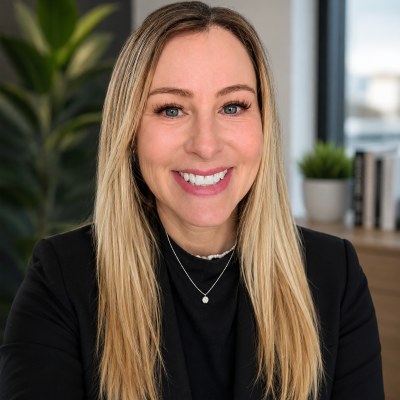
Corrine Rubida, BS, LMT
Corrine completed her massage therapy training at Gateway College of Massage Therapy in 1997 and earned a Bachelor of Science degree in Healthcare Administration in 2012. She has been practicing and teaching massage therapy since 1997 and currently holds a massage therapy license in South Dakota. She is also a member of the ABMP. In 2002, Corrine founded the Center for Massage Therapy CE to make professional massage continuing education courses available both online and by mail. Since then, she has developed more than 100 home-study massage continuing education courses and has taught live courses for AMTA and the Gateway College of Massage Therapy.