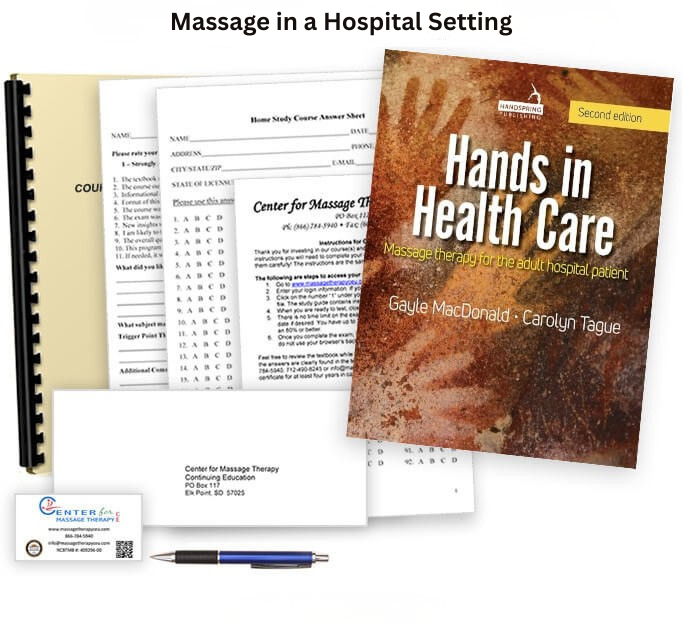
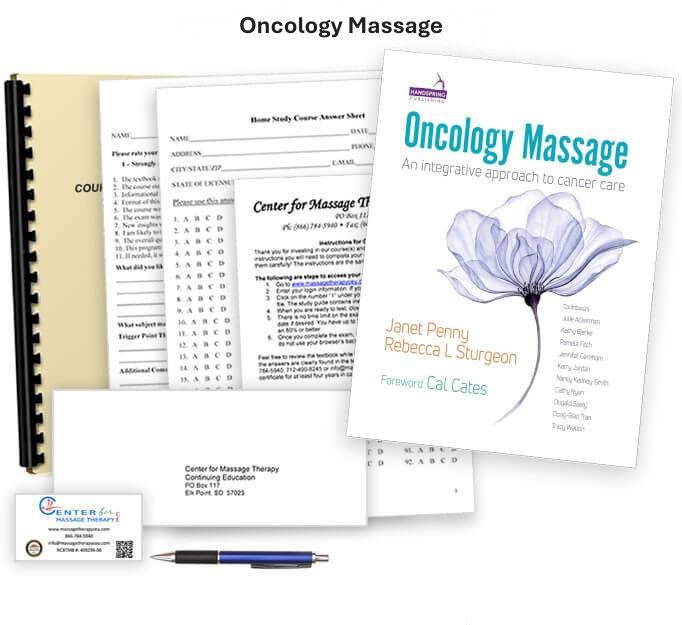
Cost includes all materials. Shipping, if applicable, is a flat rate.
Learn the fundamentals of working with elderly, frail, chronically ill, and injured clients and explore massage therapy considerations for this specialized population. This 12-hour continuing education course introduces massage therapists to the aging process, changes that occur in the body with age, contraindications, appropriate positioning, massage techniques, communication, documentation, and professional considerations when working with elderly and ill clients.
The course also introduces Comfort Touch, a gentle approach to bodywork designed to provide physical and emotional support through appropriate positioning, touch, and communication. A 34-minute instructional video provides additional information and technique demonstrations.
In this course, you will learn:
How the aging process affects the body and influences massage therapy
Common considerations when working with elderly, frail, chronically ill, and injured clients
Benefits, contraindications, precautions, and safety considerations
Appropriate positioning for elderly and ill clients
Massage techniques that can be adapted for different client needs
The principles and applications of Comfort Touch
How communication can support comfortable and respectful client interactions
Documentation considerations when working with elderly and ill clients
Professional and practice considerations for providing massage to specialized populations
Practical information and techniques demonstrated through approximately 34 minutes of online video
Why take this course?
Working with elderly, frail, and chronically ill clients requires massage therapists to consider changes in the body, positioning, health conditions, comfort, communication, and safety. Developing a stronger understanding of these considerations can help therapists make more informed decisions and adapt their approach to individual client needs.
This comprehensive 12-hour course combines education about aging and chronic illness with practical massage considerations and an introduction to Comfort Touch. It is a useful option for massage therapists who want to expand their knowledge of working with older or medically complex clients and develop a stronger foundation for providing appropriate, supportive massage therapy.
Describe the physical changes associated with aging and how they may influence massage therapy.
Identify important considerations when working with elderly, frail, chronically ill, or injured clients.
Identify contraindications, precautions, and safety considerations for massage with elderly and ill clients.
Describe appropriate positioning and techniques for adapting massage to individual client needs.
Explain the fundamental principles and applications of Comfort Touch.
Describe communication strategies for creating supportive and respectful client interactions.
Identify documentation and professional considerations when working with elderly and medically complex clients.
Apply appropriate massage therapy considerations based on the individual needs, condition, and comfort of the client.
Text: Comfort Touch: Nurturing Acupressure by Mary Kathleen Rose, 177 pages
Approximately 34 minutes of online instructional video and technique demonstrations
Course instruction guide
60-question multiple-choice final exam
Course evaluation
Certificate of Achievement upon completion
Unlimited phone support for course-related questions
The Center for Massage Therapy Continuing Education, LLC is an Approved Provider through the National Certification Board for Therapeutic Massage and Bodywork (NCBTMB); Approved Provider number 409296-00.
Our massage online continuing education courses are also accepted by the American Massage Therapy Association (AMTA), Associated Bodywork and Massage Professionals (ABMP), and most state boards.
For more information on individual state requirements and approvals, please visit our Approvals page and click on your state.
This course was exactly what I was looking for as I am about to do volunteer work as a massage therapist for a local hospice center. Thank you! - Ann-Marie S.
I really liked the way it described the aging process. It is not a comfortable topic for me and I enjoyed the insight. - Angela Defee
The course was challenging but the format was easy to follow. - Lisa White, LMT
Very informative. The book described the material in multiple ways to help the reader more fully understand. Well written book. - Melissa Green, LMT
I loved the online technique demonstrations. - Sara Smith, LMT
Good pictures and detailed descriptions of actions. - Christina Warder
Comfort Touch is NOT derived from which of the following modalities?
A. Shiatsu
B. Acupressure
C. Deep tissue massage
D. Integrative Massage
It is the intention of Comfort Touch work to:
A. Try to fix, change and/or cure the client through the use of proper positioning, appropriate techniques, and skillful communication
B. Seek out and diagnose the client’s condition through the use of proper positioning, appropriate techniques, and skillful communication
C. Offer physical and emotional support through the use of proper positioning, appropriate techniques, and skillful communication
D. Provide conventional medical care to the client using proper positioning, appropriate techniques, and skillful communication
When working on the sacrum, hold __________ on the sacrum and the upper back to balance the energy along the length of the spine.
A. Contact circling
B. Contact brushing
C. Encompassing
D. Contact pressure
Course Author
About the Instructor
Mary Kathleen Rose
Mary Kathleen Rose has been actively involved in the holistic health movement since the 1970s. A pioneer in the field of touch therapies for the elderly and the ill, she is an advocate for the needs of special populations. She graduated from the Boulder College of Massage Therapy in 1985 and has a B.A. in Integrative Healing with a minor in Art from Metropolitan State University of Denver.
The developer of Comfort Touch®, Mary has worked as a nationally known consultant for massage training and research in medical settings. She has contributed to NIH-funded studies for people with spinal cord injuries, cancer, sickle cell anemia, and other studies involving diabetes and hospice care. Since 1991 she has presented workshops in Comfort Touch® nationwide for massage therapists and other healthcare professionals. Her classes have been sponsored by numerous massage schools, senior communities, the Health Education Network, and the National Hospice and Palliative Care Organization.

.png)