Cost includes all materials. Shipping, if applicable, is a flat rate.
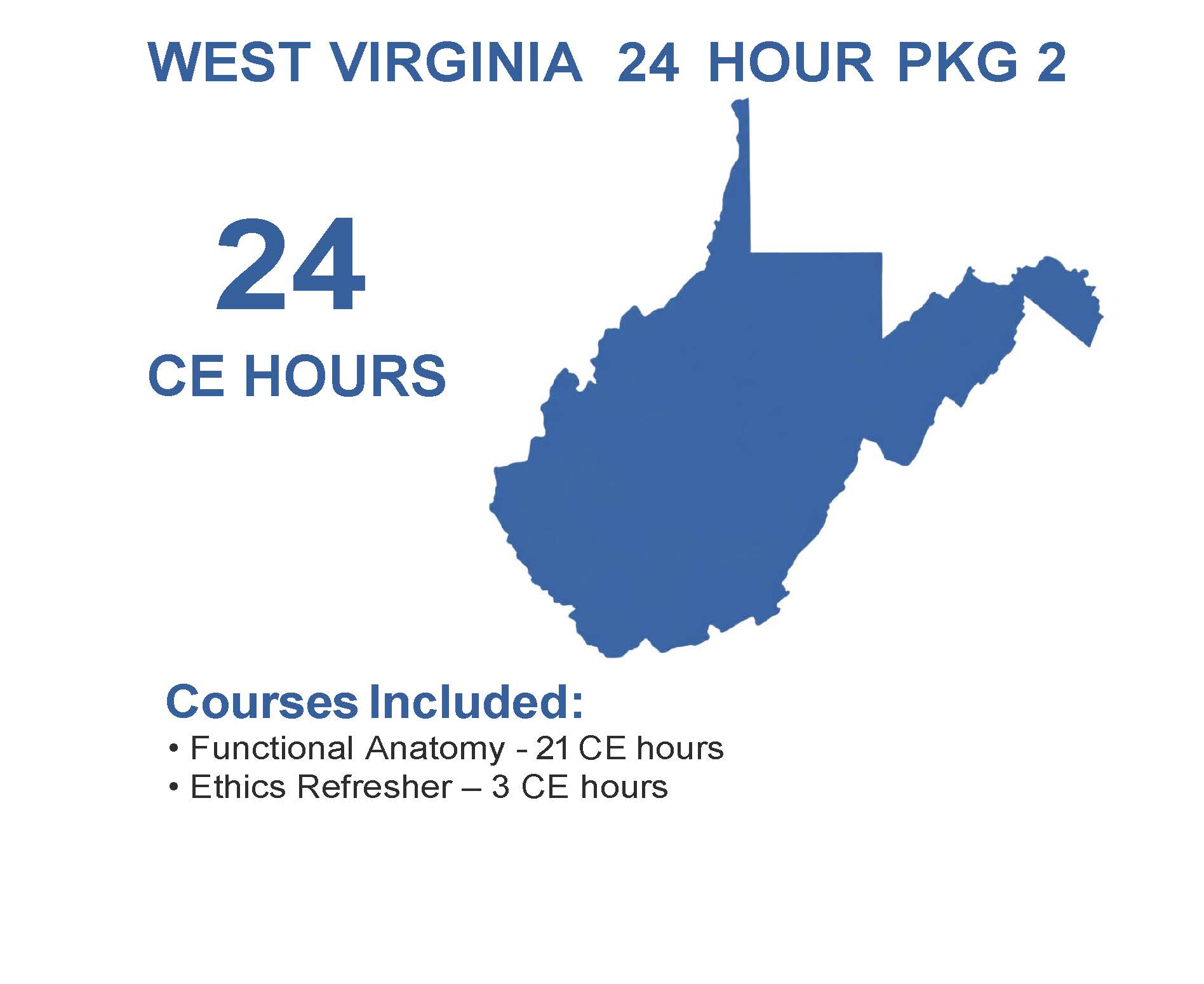
Develop a deeper understanding of functional anatomy, kinesiology, and advanced palpation for massage therapy. This 21-hour continuing education course goes beyond identifying muscles by location, exploring how bones, joints, muscles, fascia, ligaments, and tendons work together to produce movement.
Using detailed anatomical instruction and practical palpation techniques, the course examines muscle origins, insertions, actions, and innervation, along with joint movement and range-of-motion assessment. Step-by-step instruction and online video demonstrations help massage therapists develop a more practical understanding of locating and palpating muscles and assessing their function.
In this course, you will learn:
The organization and structure of the musculoskeletal system
Osteology, arthrology, and myology
The structure and function of bones, joints, muscles, fascia, ligaments, and tendons
Muscle origins, insertions, actions, and nerve innervation
How muscles work together to create movement
Normal joint movements and ranges of motion
Active, passive, and resisted range-of-motion techniques
Palpation methods for locating and identifying muscles
How to assess muscle function through movement and palpation
Practical palpation techniques demonstrated through online video
Why take this course?
A strong understanding of functional anatomy can help massage therapists better understand what they are feeling beneath their hands and how muscles and joints contribute to movement. Advanced palpation skills can also make anatomical knowledge more practical by helping therapists identify specific structures and assess their function.
This comprehensive 21-hour course is designed for massage therapists who want to move beyond memorizing anatomical locations and develop a deeper understanding of how the musculoskeletal system works. With detailed textbook instruction, range-of-motion assessment, and video-supported palpation techniques, the course provides a strong foundation for continued development of hands-on skills.
Describe the major structures and functions of the musculoskeletal system.
Explain the fundamental principles of osteology, arthrology, and myology.
Identify the origins, insertions, actions, and innervation of muscles presented in the course.
Explain how muscles and joints work together to produce movement.
Describe normal joint movement and range-of-motion principles.
Demonstrate an understanding of active, passive, and resisted range-of-motion assessment.
Apply palpation techniques to locate and identify specific muscles and anatomical structures.
Use functional anatomy and palpation knowledge to better understand muscle function during massage therapy assessment and treatment.
Text: Functional Anatomy: Musculoskeletal Anatomy, Kinesiology, and Palpation for Manual Therapists, 2nd Edition, by Christy J. Cael, 447 pages
Approximately 30 minutes of online video demonstrations showing how to locate and palpate muscles
Course instruction guide
108-question multiple-choice final exam
Course evaluation
Certificate of Achievement upon completion
Unlimited phone support for course-related questions
The Center for Massage Therapy Continuing Education, LLC is an Approved Provider through the National Certification Board for Therapeutic Massage and Bodywork (NCBTMB); Approved Provider number 409296-00.
Our massage online continuing education courses are also accepted by the American Massage Therapy Association (AMTA), Associated Bodywork and Massage Professionals (ABMP), and most state boards.
For more information on individual state requirements and approvals, please visit our Approvals page and click on your state.
I was thoroughly impressed with the amount of detailed information in this textbook. I had been looking for a refresher course for anatomy and this book exceeded my expectations. I look forward to being able to continue to review the information found in this textbook. I highly recommend this course! 10 out 10!!!! - Erin T.
I liked that the course was offered in such a way that I could read, study and review the exam independently. As a full-time teacher, this has great advantages. - Amy R.
What are reticular fibers?
a. Thin proteins that branch into tiny nets capable of resisting force in multiple directions
b. Long, straight stands of protein wound together like rope
c. Fibers that contain the protein elastin and appear branched and wavy
d. Cells that produce and secrete proteins that make up the fibers in the extracellular matrix
What are syndesmoses?
a. Continuous periosteal connections between bones
b. The specific fibrous joints at which teeth fit into sockets in the jaw
c. The most mobile of all the joints
d. Fibrous joints held together with a cord or a sheet of connective tissue
When palpating the medial epicondyle of the humerus, what position should the client be in?
a. Client supine with elbow flexed and forearm pronated
b. Client supine with elbow bent and forearm neutral
c. Client supine with elbow flexed and forearm supinated
d. Client supine with elbow relaxed and forearm pronated
Which of the following muscles is NOT involved in trunk flexion?
a. Iliocostalis
b. Rectus abdominis
c. External oblique
d. Internal oblique
Which of the following are the actions of the psoas muscle?
a. Abducts the hip, internally rotates the hip
b. Flexes the hip, extends the knee
c. Flexes the hip, externally rotates the hip
d. Flexes the knee, internally rotates the knee
Course Author
About the Instructor
Corrine Rubida, BS, LMT
Corrine completed her massage therapy training at Gateway College of Massage Therapy in 1997 and earned a Bachelor of Science degree in Healthcare Administration in 2012. She has been practicing and teaching massage therapy since 1997 and currently holds a massage therapy license in South Dakota. She is also a member of the ABMP. In 2002, Corrine founded the Center for Massage Therapy CE to make professional massage continuing education courses available both online and by mail. Since then, she has developed more than 100 home-study massage continuing education courses and has taught live courses for AMTA and the Gateway College of Massage Therapy.