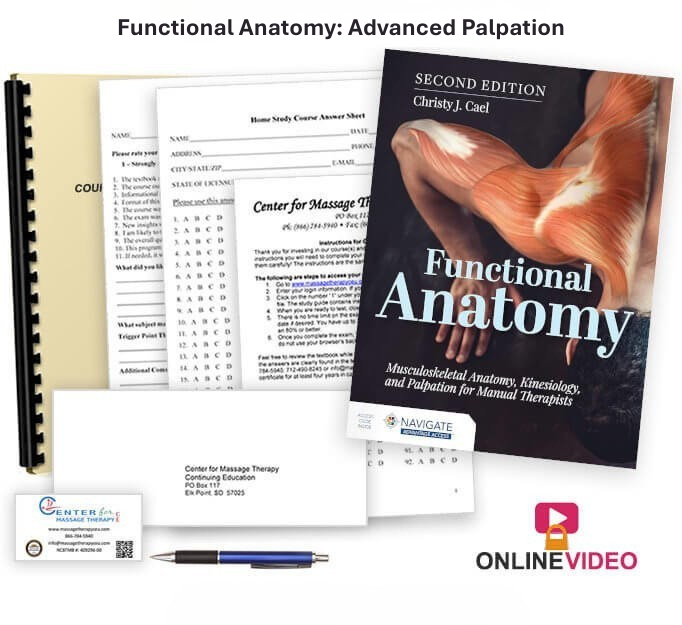
Cost includes all materials. Shipping, if applicable, is a flat rate.
Develop your knowledge of neuromuscular therapy (NMT) in this 20-hour continuing education course for massage therapists. This course introduces the history and physiological basis of NMT while providing practical information on client assessment, palpation, body mechanics, trigger points, referral zones, and neuromuscular techniques.
The course also covers muscle anatomy, including origin, insertion, and action, along with NMT considerations, precautions, and treatment routines organized by body region. Approximately two hours of online technique demonstrations complement the textbook and provide visual instruction for the techniques presented.
In this course, you will learn:
The history, principles, and physiological basis of neuromuscular therapy
NMT assessment, palpation, and treatment techniques
Muscle anatomy, including origin, insertion, and action
Trigger point anatomy, characteristics, and referral patterns
Trigger point activation and perpetuating factors
Neuromuscular therapy considerations and precautions
Proper body mechanics for performing NMT techniques
NMT routines organized by body region
Techniques demonstrated through approximately two hours of online video
Why take this course?
Neuromuscular therapy combines assessment, anatomy, palpation, and focused soft tissue techniques. This 20-hour course provides a broad foundation in NMT while giving massage therapists practical instruction through regional treatment routines and approximately two hours of online technique demonstrations.
Explain the history, principles, and physiological basis of neuromuscular therapy.
Describe the role of assessment and palpation in neuromuscular therapy.
Identify the origin, insertion, and action of muscles addressed in NMT.
Explain the characteristics of trigger points, referral zones, and common trigger point patterns.
Describe factors that may contribute to trigger point activation and perpetuation.
Identify appropriate NMT techniques, considerations, and precautions.
Explain proper body mechanics for performing neuromuscular therapy techniques.
Describe regional NMT routines and their application within massage therapy practice.
Text: Neuromuscular Therapy Manual by Jocelyn Granger, 350 pages
Approximately 2 hours of online neuromuscular therapy technique demonstrations
Study guide with instructions
108-question online multiple-choice exam
Course evaluation
Certificate of achievement upon completion
Unlimited phone support for any of your questions
The Center for Massage Therapy Continuing Education, LLC is an Approved Provider through the National Certification Board for Therapeutic Massage and Bodywork (NCBTMB); Approved Provider number 409296-00.
Our online massage continuing education courses are also accepted by the American Massage Therapy Association (AMTA), Associated Bodywork and Massage Professionals (ABMP), and most state boards.
For more information on individual state requirements and approvals, please visit our Approvals page and click on your state.
This course was a great addition to Myofacial Release / Lymphatic Drainage & Dry Needling certifications that I already have. Excellent content! - Mary Ann C.
I like the detailed history, immediate references given in parenthesis, the outlook/thoughts from many of the key individuals who helped with research for this modality. - Georgia Bair, LMT
I liked learning about the different techniques used to perfrom neuromuscular therapy. - Linda Smith, LMT
It was nice to see the textbook included research to back up the neuromuscular theories. - Aspen Cronin, LMT
I liked how in depth the information was. It was challenging, but the exam flowed well with the textbook. There were no trick questions - D. Trometer, LMT
What is neuromuscular therapy?
A. A therapeutic massage technique that focuses on releasing chronic muscle tension and knots by applying firm pressure and slow strokes to the deeper layers of muscles and connective tissues
B. A comprehensive and advanced system of soft tissue manipulation that specializes in working with chronic myofascial pain and pain syndromes
C. An area of hypersensitivity that when compressed creates referral sensation at a distance from that area
D. A condition in which a muscle is chronically shortened because of overuse or postural dysfunction
__________ is a stroke in which we friction across the fibers of deeper muscles using thumbs or fingertips.
A. Cross fiber friction
B. Longitudinal friction
C. Latitudinal friction
D. Pincer technique
Which of the following is NOT an action of the longissimus muscle?
A. Extension of the spine (bilateral)
B. Lateral flexion of the spine (unilateral)
C. Rotation of the spine (unilateral)
D. Fine adjustments between vertebrae
Where should the therapist be standing during the last step of a neuromuscular therapy routine on the erector spinae and transversospinalis groups?
A. At the head of the table
B. At the foot of the table
C. At the side of the table, facing the head
D. At the side of the table, facing the low back
Course Author
About the Instructor
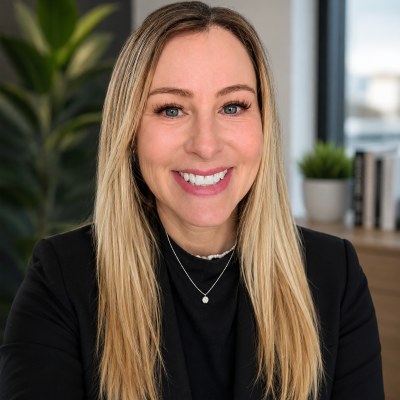
Corrine Rubida, BS, LMT
Corrine completed her massage therapy training at Gateway College of Massage Therapy in 1997 and earned a Bachelor of Science degree in Healthcare Administration in 2012. She has been practicing and teaching massage therapy since 1997 and currently holds a massage therapy license in South Dakota. She is also a member of the ABMP. In 2002, Corrine founded the Center for Massage Therapy CE to make professional massage continuing education courses available both online and by mail. Since then, she has developed more than 100 home-study massage continuing education courses and has taught live courses for AMTA and the Gateway College of Massage Therapy.