Back to All Courses

Shiatsu Therapy

Shiatsu Therapy
12 CE Hours
$134.00

Cost includes all materials. Shipping, if applicable, is a flat rate.


Learn the principles and practices of Shiatsu massage in this 12-hour continuing education course for massage therapists. Shiatsu is a Japanese bodywork practice influenced by traditional Chinese medicine that uses pressure, stretching, and specific techniques applied to the body's pressure points and energy pathways.

The course explores the history and theory of Shiatsu along with traditional Chinese medicine concepts such as the Five Elements and Organ Channels. Basic Shiatsu postures and applications are presented through step-by-step instruction and more than two hours of online video demonstrations.

In this course, you will learn:

  • The history, origins, and theory of Shiatsu
  • Basic principles and practices of Shiatsu massage
  • Pressure points and energy lines used in Shiatsu
  • Traditional Chinese medicine concepts related to Shiatsu
  • The Five Elements and Organ Channels
  • Basic Shiatsu postures and body positions
  • Stretching and pressure techniques used in Shiatsu
  • Benefits, contraindications, and safety considerations
  • Basic Shiatsu applications for massage therapy practice
  • Techniques demonstrated through more than two hours of online video

Why take this course?

Shiatsu provides massage therapists with an opportunity to explore a different approach to bodywork that incorporates pressure, stretching, traditional Chinese medicine concepts, and specific body positions. Learning the foundations of Shiatsu can expand your knowledge of massage and complementary bodywork techniques.

This 12-hour course combines a comprehensive textbook with step-by-step video instruction, making it a good choice for massage therapists who want an introduction to Shiatsu massage and its traditional principles. The more than two hours of technique demonstrations provide additional visual instruction for the postures and applications presented in the course.

  • Describe the history, origins, and basic theory of Shiatsu.
  • Explain the relationship between Shiatsu and traditional Chinese medicine.
  • Identify pressure points and energy pathways used in Shiatsu.
  • Describe the Five Elements and Organ Channels.
  • Identify basic Shiatsu postures and body positions.
  • Describe stretching, pressure, and other techniques used in Shiatsu.
  • Identify benefits, contraindications, and safety considerations.
  • Describe basic Shiatsu applications demonstrated through the course materials and videos.
  • Text: The Practice of Shiatsu by Sandra K. Anderson
  • Video: The Practice of Shiatsu with more than 2 hours of techniques
  • Course guide with instructions
  • 87-question multiple-choice examination
  • Course evaluation
  • Certificate of achievement upon completion
  • Unlimited phone and email support for any questions

The Center for Massage Therapy Continuing Education, LLC is an Approved Provider through the National Certification Board for Therapeutic Massage and Bodywork (NCBTMB); Approved Provider number 409296-00.

Our massage online continuing education courses are also accepted by the American Massage Therapy Association (AMTA), Associated Bodywork and Massage Professionals (ABMP), and most state boards.

For more information on individual state requirements and approvals, please visit our Approvals page and click on your state.

Liked the step by step DVD. It helped to illustrate the information and techniques presented in the book. I also liked the history and information on Chinese medicine. - Raven Singleton, LMT

I thought the information was technical but I was able to gain the information needed. - Dawn DaViera, LMT

It was a change for me to see a mat on the floor with a clothed client as I have always practiced traditional massage on a table with draping. I enjoyed it. - Zoe Johnson, LMT

Where do the roots of shiatsu originate?
A.    Traditional Thai medicine
B.    Traditional Chinese medicine
C.    Traditional American bodywork
D.    Scientific medicine only

All of the following are common types of shiatsu currently practiced EXCEPT:
A.    Tsubo therapy and acupressure
B.    Yin and Yang shiatsu
C.    Ohashiatsu
D.    Five Element shiatsu

If your client presents symptoms of a Water element imbalance, which of the following questions is appropriate to ask?
A.    Do you have any tendon or joint problems?
B.    Do you have a history of skin disorders?
C.    Do you have any history of kidney or urinary tract problems?
D.    Do you have any heart conditions or high blood pressure?

Course Author

About the Instructor

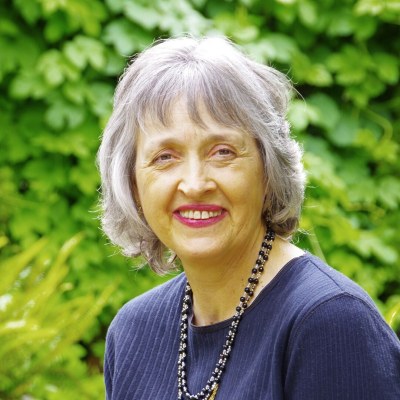
Sandra K. Anderson

Sandra K. Anderson, BA, LMT, ABT

Most of Sandra's professional career has been as a bodywork practitioner and bodywork educator. After graduating with a BA in biology from Ithaca College in Ithaca, New York, she worked in various settings until she moved to Tucson and discovered massage therapy. She graduated from the Desert Institute of the Healing Arts in Tucson, Arizona (now Cortiva - Tucson) with certification in massage therapy, 1991; in shiatsu, 1999; and in Thai massage, 2002. During this time she also built her private practice, and taught at the Desert Institute. For twelve years she instructed students, primarily in the areas of anatomy, physiology, kinesiology, pathology, shiatsu techniques, and supervised massage and shiatsu student clinics. She was chair of the anatomy and physiology department for five years, during which time she developed curriculum and teacher training courses. For five years she served as chair of the Examination Committee for the National Certification Board for Therapeutic Massage and Bodywork.