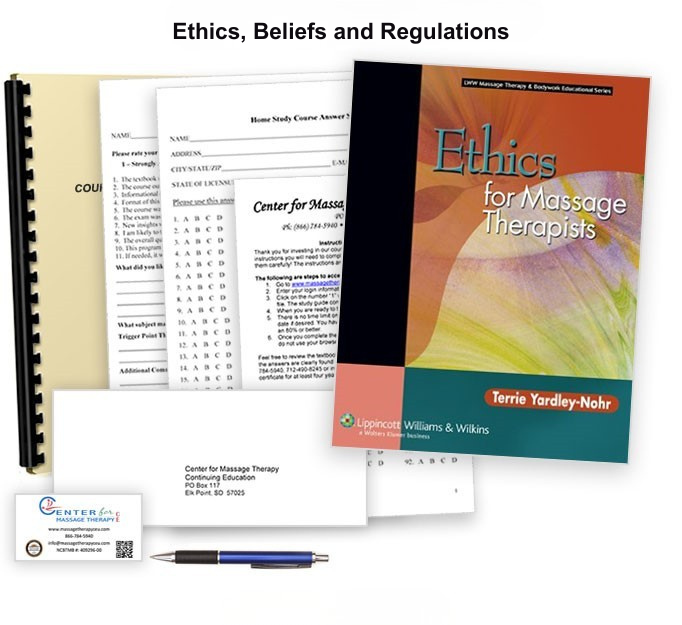
Cost includes all materials. Shipping, if applicable, is a flat rate.
Learn how to recognize contraindications, medical precautions, and other safety considerations when providing Swedish massage. This 3-hour continuing education course introduces massage therapists to absolute and systemic contraindications, endangerment sites, headaches, client intake, treatment planning, informed consent, professionalism, and SOAP charting.
Whether you are reviewing safe massage practices or looking to strengthen your ability to recognize when massage is appropriate, this course provides practical information to help you determine when massage should be modified or avoided and when referral to another healthcare professional may be appropriate.
In this course, you will learn:
The difference between absolute, systemic, and local contraindications
Common medical precautions related to massage therapy
Endangerment sites and why they require special consideration
Headaches and situations in which massage may or may not be appropriate
How to recognize situations that require modification or avoidance of massage
The importance of client intake and gathering relevant health information
How to develop appropriate massage treatment plans
Informed consent and professional responsibilities
SOAP charting and client documentation
When referral to another healthcare professional may be appropriate
Why Take This Course?
Recognizing contraindications and medical precautions is an important part of providing safe and responsible massage therapy. Understanding when massage is appropriate, when treatment should be modified, and when a client should be referred can help massage therapists make more informed decisions about client care.
This focused 3-hour course combines safety considerations with practical information about intake forms, treatment planning, informed consent, and documentation. It is a useful option for massage therapists who want to strengthen their knowledge of contraindications and professional decision-making.
Define absolute, systemic, and local contraindications to massage.
Identify common medical precautions and endangerment sites relevant to massage therapy.
Explain when massage may be appropriate, modified, or contraindicated for clients with headaches.
Recognize client conditions and circumstances that may require changes to a massage treatment.
Explain the importance of thorough client intake and health-history information.
Develop appropriate treatment plans based on client information and professional considerations.
Describe the role of informed consent, SOAP charting, and professional documentation.
Identify situations in which referral to another healthcare professional may be appropriate.
Text: Ethics: Contraindications to Swedish Massage by Cindy Hummel, LMT, LPN and Corrine Mollet Rubida, BS, LMT, 33 pages
Course instruction guide
19-question multiple-choice final exam
Course evaluation
Certificate of Achievement upon completion
Unlimited phone support for course-related questions
The Center for Massage Therapy Continuing Education, LLC is an Approved Provider through the National Certification Board for Therapeutic Massage and Bodywork (NCBTMB); Approved Provider number 409296-00.
Our massage online continuing education courses are also accepted by the American Massage Therapy Association (AMTA), Associated Bodywork and Massage Professionals (ABMP), and most state boards.
For more information on individual state requirements and approvals, please visit our Approvals page and click on your state.
Packed with pertinent information. - A. Lutes, LMT
I liked the information that was provided. It gave me more tools to add to professional communication. - K. Pelanek, LMT
Very helpful with the resume info. - Rachel Carey, LMT
It was a quick read but was good to refresh my resume and interview skills. - Antoinette McKee, LMT
How can you make a good impression at an interview?
A. Dress casually so the interviewer doesn’t think you are too uptight
B. Don’t add to conversation and stay relatively quiet, this will help you avoid saying something you will regret
C. Show that you have researched the company by asking questions and being involved in the interview
D. All of the above
Why is networking important for a business?
A. Gives you a chance to create business connections
B. Promotes you and/or your business in the community
C. Allows you to stay current and up to date in what is going on in the market
D. All of the above
What is active listening?
A. Listening while partaking in another activity
B. Thinking about what the person is saying and analyzing how you could add to the conversation
C. Hearing what the person is saying
D. Nodding your head or moving your body when someone is speaking
Course Author
About the Instructor
Stephen Shipe, Ph.D, CFA
Stephan Shipe is a finance professor at Wake Forest University. He has a Ph.D. in Finance from Florida State University, a bachelor's degree in finance from the University of North Florida and is a CFA Charter holder. In addition to teaching at Wake Forest University, he has taught in the business schools of Florida State University and the University of New Hampshire and has started and managed multiple businesses. Stephan has combined his experience teaching, his extensive business knowledge, and his industry experience to form a collection of business based continuing education courses available to massage therapists.