Cost includes all materials. Shipping, if applicable, is a flat rate.
Learn how multiple massage therapy approaches can be combined into an integrated approach to client care. This 10-hour continuing education course introduces massage therapists to deep tissue massage, neuromuscular therapy, trigger point therapy, Swedish massage, polarity therapy, shiatsu therapy, and postural assessment.
Whether you are new to integrated massage or an experienced therapist looking to expand your treatment techniques, this course provides a broad foundation for combining different approaches based on client needs. The course includes postural evaluation charts, trigger point resources, endangerment site illustrations, condition-specific considerations, technique demonstrations, and massage routines for different areas of the body.
In this course, you will learn:
The fundamentals and definition of integrated massage
How different massage modalities can be incorporated into an integrated approach
Deep tissue, neuromuscular, trigger point, and Swedish massage techniques
Basic principles associated with polarity and shiatsu therapy
Postural assessment and how to identify important postural patterns
Trigger point locations and considerations for different body regions
Endangerment sites and areas requiring special caution during massage
How specific conditions may affect massage therapy choices
Techniques and treatment routines for different areas of the body
How to select and combine techniques based on individual client needs
Why take this course?
Massage therapists often use more than one technique during a treatment session. Understanding how different modalities can complement one another can help therapists develop more individualized approaches to massage and expand their professional skill set.
This comprehensive 10-hour course combines multiple massage approaches with postural assessment, trigger point information, safety considerations, and practical technique demonstrations. It is a useful option for massage therapists who want to broaden their knowledge of massage techniques and develop a more integrated approach to treatment planning.
Define integrated massage and describe the purpose of combining multiple massage approaches.
Identify the fundamental principles and applications of the modalities presented in the course.
Explain how postural assessment can be used to identify patterns that may influence massage treatment.
Locate and recognize common trigger points and areas requiring special caution during massage.
Identify conditions and client factors that may influence the selection of massage techniques.
Apply appropriate techniques to different areas of the body using integrated massage principles.
Develop treatment routines that combine appropriate techniques for specific client needs.
Use assessment and safety information to make more informed decisions about massage therapy techniques and treatment planning.
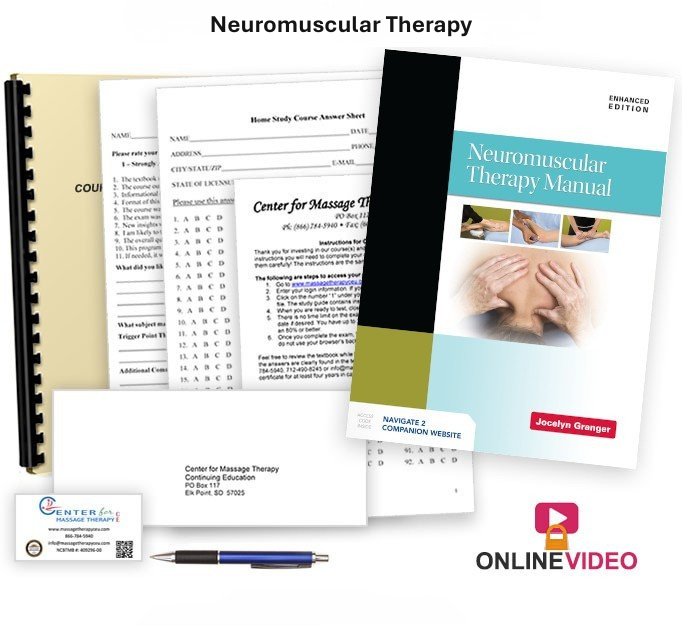
Text: The Balanced Body by Ruth Werner, 274 pages
Online access to massage therapy resources and technique demonstrations
Course instruction guide
50-question multiple-choice final exam
Course evaluation
Certificate of Achievement upon completion
Unlimited phone support for course-related questions
The Center for Massage Therapy Continuing Education, LLC is an Approved Provider through the National Certification Board for Therapeutic Massage and Bodywork (NCBTMB); Approved Provider number 409296-00.
Our massage online continuing education courses are also accepted by the American Massage Therapy Association (AMTA), Associated Bodywork and Massage Professionals (ABMP), and most state boards.
For more information on individual state requirements and approvals, please visit our Approvals page and click on your state.
Great course, I loved learning about an approach that includes multiple modalities. - Jenna C.
Loved the different approach to massage modalities! - Perry Jones, LMT
Very detailed, interesting information presented in a well organized format. - Matthew D., LMT
Easy to use format, and I learned so much! - Jin Chu
What is the integrated deep tissue therapy system?
A. A specific holistic massage therapy approach to physical well-being that manually accesses both superficial and deep structures
B. A specific holistic chiropractic approach to physical well-being that manually accesses both superficial and deep structures
C. A specific holistic massage therapy approach to mental well-being that manually accesses both superficial and deep structures
D. A specific holistic medical approach to mental well-being that manually accesses both superficial and deep structures
Primary goals of integrated deep tissue therapy techniques include:
A. Re-establishing positive and negative ion flow throughout the body
B. Improving waste–nutrient exchange at a cellular and muscular level
C. Reversal of scar tissue patterns; establishment of correct prime mover/antagonist tension; improvement of physical performance
D. Enhancement of oxygen and nutrition in tissue cells; reduction of the effects of scar tissue; decreasing pain sensations
Which of the following is an objective for the posterior thigh and hip routine?
A. To increase restrictions in the hamstring muscles and their attachments
B. To help the deep lateral rotators to contract
C. To reduce sciatic pain generated by a tight piriformis muscle
D. To bring imbalance to the soft tissues acting on the sacrum
Course Author
About the Instructor
Corrine Rubida, BS, LMT
Corrine completed her massage therapy training at Gateway College of Massage Therapy in 1997 and earned a Bachelor of Science degree in Healthcare Administration in 2012. She has been practicing and teaching massage therapy since 1997 and currently holds a massage therapy license in South Dakota. She is also a member of the ABMP. In 2002, Corrine founded the Center for Massage Therapy CE to make professional massage continuing education courses available both online and by mail. Since then, she has developed more than 100 home-study massage continuing education courses and has taught live courses for AMTA and the Gateway College of Massage Therapy.