Assessment and Treatment Methods for Manual Therapists
12 CE Hours
$134.00
Cost includes all materials. Shipping, if applicable, is a flat rate.
Learn advanced assessment and treatment methods designed to help manual therapists develop a deeper understanding of the body's soft tissue and whole-body function. This 12-hour continuing education course introduces massage therapists to assessment methods based on structural integration, including local listening, layer palpation, and manual thermal evaluation, along with gentle treatment techniques that use pressure, tissue listening, and movement to promote unwinding.
Whether you are looking to expand your massage therapy assessment skills or add new treatment approaches to your practice, this course provides step-by-step instruction and illustrations for 19 assessment methods and 24 treatment methods. Five in-depth treatment protocols demonstrate how these techniques can be incorporated into a structured approach to client assessment and treatment.
In this course, you will learn:
The principles and concepts behind assessment and treatment methods based on structural integration
How to approach client assessment by considering whole-body function
Local listening techniques for evaluating the body's soft tissues
Layer palpation and other methods of assessing different layers of tissue
Manual thermal evaluation as an assessment method
How to use assessment methods to identify areas that may require further attention
How to apply gentle treatment methods using pressure and awareness of the client's tissue
Techniques that use tissue listening and directional movement to promote unwinding
How to recognize and work with effort barriers during treatment
19 assessment methods presented in the course
24 gentle treatment methods presented in the course
Five in-depth treatment protocols demonstrating how the assessment and treatment methods can be applied
How these assessment and treatment methods may complement your existing massage therapy techniques
Why take this course?
Effective assessment can help massage therapists develop a more informed approach to working with their clients. This course provides additional assessment and treatment methods that can complement existing massage therapy techniques while giving you practical tools for exploring soft tissue and whole-body function.
With step-by-step instructions, illustrations, and five detailed treatment protocols, Assessment and Treatment Methods for Manual Therapists provides a structured opportunity to expand your professional knowledge and explore additional approaches to manual therapy.
Upon completion of this course, massage therapists will be able to:
Describe the basic principles of structural integration as they relate to manual assessment and treatment.
Explain the role of whole-body assessment when evaluating a client's soft tissue and functional patterns.
Identify and describe local listening, layer palpation, and manual thermal evaluation as assessment methods presented in the course.
Apply or describe appropriate procedures for performing the assessment methods presented in the course.
Recognize areas of the body that may require further assessment based on information gathered through manual assessment techniques.
Explain the principles of tissue listening and how it can guide manual treatment approaches.
Describe gentle treatment methods that use pressure, tissue awareness, and directional movement to promote unwinding.
Explain the concept of effort barriers and their relationship to the treatment methods presented in the course.
Describe the purpose and application of the 19 assessment methods and 24 treatment methods presented in the course.
Apply the concepts presented in the five treatment protocols to develop a more structured approach to assessment and treatment.
Integrate appropriate assessment and treatment concepts with existing massage therapy techniques.
Recognize the scope and limitations of manual assessment and treatment methods and the importance of appropriate professional judgment when working with massage therapy clients.
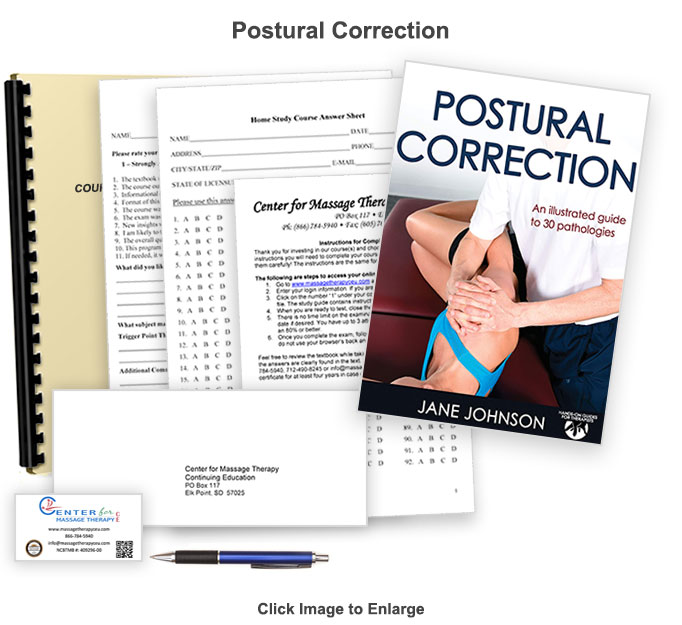
Text: Assessment and Treatment Methods for Manual Therapists, by Jeffrey Burch, 286 pages
Guide with instructions, 15 pages
Miltiple choice exam of 60 questions
Course evaluation
Certificate of achievement upon completion
Unlimited phone and email support for any of your questions
The Center for Massage Therapy Continuing Education, LLC is an Approved Provider through the National Certification Board for Therapeutic Massage and Bodywork (NCBTMB); Approved Provider number 409296-00.
Our continuing education courses are also accepted by the American Massage Therapy Association (AMTA), Associated Bodywork and Massage Professionals (ABMP), and most state boards.
For more information on individual state requirements and approvals, please visit our Approvals page and click on your state.
This course was very informative. I learned a lot I can incorporate into my practice. - Kelly M.
Materials were mailed quickly and it was easy to complete. - Seth S.
Loved this approach to assessment! - Mickey G.
What term refers to the best area to work on a person to make the greatest beneficial change for the whole person?
a. First lesion
b. Primary lesion
c. Secondary lesion
d. Assessment lesion
Which of the following is NOT a useful attitude or mindset when applying any assessment method?
a. Openness to experience
b. Vibrant curiosity
c. Complete set of expectations
d. Genuine compassion
When using CSR to locate a primary lesion, how long should you evaluate each area of the body?
a. At least 10 minutes
b. At least 2 minutes
c. At least 30 seconds
d. At least 5 seconds
What is the relationship to effort barriers for the pendulum wall scrubbing treatment method?
a. First barrier load is always maintained
b. First barrier load is never maintained
c. Far first barrier load is always maintained
d. Far first barrier load is never maintained
Course Author
About the Instructor
Corrine Rubida, BS, LMT
Corrine completed her massage therapy training at Gateway College of Massage Therapy in 1997 and earned a Bachelor of Science degree in Healthcare Administration in 2012. She has been practicing and teaching massage therapy since 1997 and currently holds a massage therapy license in South Dakota. She is also a member of the ABMP. In 2002, Corrine founded the Center for Massage Therapy CE to make professional massage continuing education courses available both online and by mail. Since then, she has developed more than 100 home-study massage continuing education courses and has taught live courses for AMTA and the Gateway College of Massage Therapy.