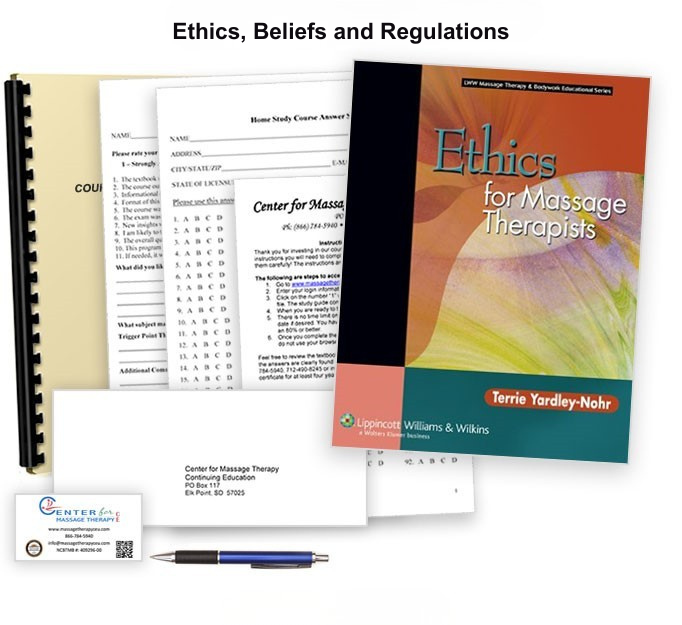
Cost includes all materials. Shipping, if applicable, is a flat rate.
Maintaining healthy professional boundaries is an essential part of providing safe, respectful, and ethical massage therapy. Because massage involves close physical contact and a trusting client-therapist relationship, understanding professional boundaries can help massage therapists navigate challenging situations and protect both themselves and their clients.
This 3 CE hour course provides massage therapists with a practical understanding of professional boundaries and client relationships, from the initial phone call and intake process through the massage session. You’ll explore different types of boundaries, common boundary concerns, and the professional responsibilities involved in maintaining appropriate client relationships.
The course also examines transference, countertransference, dual relationships, power differentials, and sexuality in the therapeutic relationship. By understanding these concepts, massage therapists can become more aware of potential boundary concerns and develop strategies for maintaining professional relationships.
In this course, you will learn:
What professional boundaries are and why they are important
Different types of boundaries within the massage therapy profession
How boundaries can become blurred or crossed
The dynamics of the client-therapist relationship
How to establish appropriate boundaries from the first client contact
The concepts of transference and countertransference
What dual relationships are and why they require careful consideration
How power differentials can influence client-therapist interactions
Appropriate professional boundaries related to sexuality
How to recognize potential boundary concerns
Strategies for maintaining healthy and professional client relationships
How clear communication can help prevent misunderstandings and boundary issues
Why take this course?
The client-therapist relationship can be complex, and boundary concerns may arise in ways that are not always obvious. Having a clear understanding of professional boundaries can help massage therapists recognize potential problems before they escalate and respond appropriately when challenging situations occur.
Whether you are fulfilling an ethics continuing education requirement or want to strengthen your professional boundaries and client relationship skills, this course provides practical information you can apply throughout your massage therapy career.
Text: Ethics for Massage Therapists text, Chapters 5-7 by Terrie Yardley Nohr, 54 pages
Guide with instructions
Multiple choice exam of 15 questions
Course evaluation
Certificate of achievement upon completion
Unlimited phone and email support for any of your questions
The Center for Massage Therapy Continuing Education, LLC is an Approved Provider through the National Certification Board for Therapeutic Massage and Bodywork (NCBTMB); Approved Provider number 409296-00.
Our massage online continuing education courses are also accepted by the American Massage Therapy Association (AMTA), Associated Bodywork and Massage Professionals (ABMP), and most state boards.
For more information on individual state requirements and approvals, please visit our Approvals page and click on your state.
The course was well written and understandable. Very applicable to my career as an LMT. - J. Corey
This course renewed reminders so helpful that I learned in my initial schooling. The importance of communication with my clients, the possible missteps I may take when sensing improper feelings from my client and how to redirect my therapy, and overall helpful suggestions in being aware of boundaries to follow so as not to have problems. - Anonymous
This course renewed reminders so helpful that I learned in my initial schooling. The importance of communication with my clients, the possible missteps I may take when sensing improper feelings from my client and how to redirect my therapy, and overall helpful suggestions in being aware of boundaries to follow so as not to have problems. - Ruthie B.
What are boundaries?
a. Limits between acceptable and unacceptable behaviors
b. Laws and rules of the massage profession enforceable by state boards
c. An individual’s or group’s standards of behavior
d. Showing the responsibility or proof performing a task or duty
All of the following are signs of transference EXCEPT:
a. The client’s voice may change (soft, loud, shaky)
b. The client reschedules an appointment with you
c. The client may begin to laugh or cry
d. The client may tense up or pull away
Many __________ can last a long time and can be very helpful to you and your business, as long as you are aware of them as such and are careful to make them work.
a. Boundaries
b. Defense mechanisms
c. Dual relationships
d. Power differentials
Course Author
About the Instructor
Terrie Yardley-Nohr, LMT
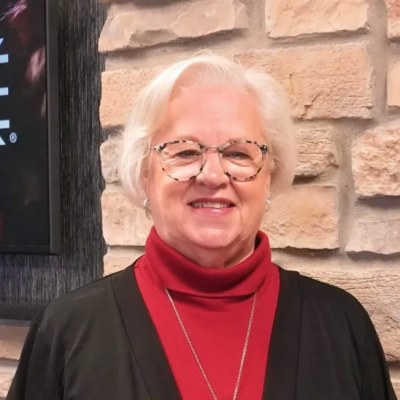
Terrie Yardley-Nohr, LMT, is the Director of Massage Therapy at MassageLuXe and has more than three decades of experience in the massage industry. Yardley-Nohr has worked in various massage settings, including private practices, retail spas and chiropractic offices. Her extensive knowledge and expertise have enabled her to develop programs and curriculums for several career colleges. Nohr’s book, “Ethics for Massage Therapists,” is a standard reference used by educators to train aspiring massage therapists. She has also served on the boards of the American Massage Therapy Association and the Alliance of Massage Therapy Educators, where she played a significant role in the passage of a law mandating state licensure and testing for massage therapists.